Envision this: When little Rayan sees a gleaming bike, he exclaims, “I can ride that!”
Five minutes later, he is in his helmet, sitting proudly on the seat and asking his dad, “But… how do I make it go?”
The experience of riding a bike for the first time is exciting, funny, and at times a bit wobbly. For kids, learning to ride is not just about getting another toy; it can be a small adventure that boosts self-confidence, promotes outdoor play, and leads to happy family memories.
But before you start looking at bikes for kids, there is one important question: Is your child actually ready for their first bike?
Here is a simple guide from Toyishland to help parents work it out.
Parents note: Every child develops at a different pace. Age recommendations are useful starting points, but a child’s height, physical abilities, confidence, and the bike manufacturer’s instructions should also guide your decision.
When Is a Child Ready for Their First Bike?
There is no one age that is right for all children; some children become excited about riding quite early, whereas others require a bit more time, and that is entirely normal.
Rather than focusing solely on age, consider your child’s balance, coordination, confidence, and interests.
The American Academy of Pediatrics advises that young children ride with adult supervision and away from street traffic, and recommends wearing bike helmets correctly.
Your child may be ready for their first bike if they:
- Can walk and run confidently
- Have reasonable balance and body control
- Can follow simple safety instructions
- Show interest in bikes or outdoor riding
- Feel comfortable sitting on a bike
- Are excited to learn rather than being forced into it
If a child looks at a bike as if it were a mysterious two-wheeled dragon, then wait a bit!
Size Matters More Than You Think
It’s not the same as buying a large shirt and then saying, “You’ll grow into it.”
A bike that is too large will be more difficult for a child to manage, while one that is too small may cause discomfort and restrict movement.
If you are selecting bikes for kids, make sure to refer to the manufacturer’s suggested height and age range. Use the manufacturer’s sizing chart and fitting instructions. Check that your child can mount and dismount the bike and operate its handlebars and brakes as intended by the manufacturer.
Remember: a giant bike doesn’t turn a child into a giant rider. It mostly creates a very confused little rider.
Don’t Forget the Safety Gear
Even though a bike might be the highlight of the event, it is important to select a correctly sized bike helmet that complies with local safety requirements.
Before your child begins riding, ensure they have the appropriate safety equipment and a safe place to practice.
NHTSA provides specific helmet-fitting guidance, including positioning the helmet level on the head and properly adjusting the straps. It also advises against buying a helmet for a child to “grow into.”
Useful riding essentials can include:
- A properly fitted helmet
- Knee and elbow protection
- Comfortable closed-toe shoes
- Bright or easily visible clothing
- Adult supervision
- A flat, traffic-free practice area
Parents should also examine the bike from time to time. They should check the brakes, tires, handlebars, seat, pedals, and all other parts as outlined in the manufacturer’s instructions.
A rapid safety check takes only a few minutes and can make riding much more enjoyable.
Let Them Learn at Their Own Speed
Learning to ride a bike can be a major milestone for a child.
Your child may start by riding two meters and then celebrate as though they had just won a championship. Enjoy their celebration!
Do not turn practice into a source of pressure. Short, enjoyable sessions can help keep children interested. Praise their progress even if it’s only a small achievement, for example, balancing for a few seconds or learning how to stop properly.
You can try making practice more playful with simple activities such as:
- Riding toward a parent
- Following an easy path
- Practicing gentle turns
- Learning to stop at a marked point
- Having a slow-riding family challenge
The aim is not to have your child become a professional rider by the time dinner is over; rather, it is to help your child feel comfortable and enjoy the learning process.
Why Bikes Can Be Great for Kids
Among the many options available when parents browse kids toys online shopping, bikes stand out because they encourage children to get moving and explore outdoor play.
Children can improve their physical skills, such as balance, coordination, and movement, through regular active play, and riding also gives them the chance to build up their confidence as they learn a new skill.
CDC guidance supports broader claims that physical activity benefits children’s muscular fitness, bone strength, cardiovascular fitness, and brain health.
There’s one more advantage: spending time with your family.
An evening ride or a weekend trip can be an experience children remember for many years, and you can expect to hear about 47 cries of “Watch me!.
How to Choose Kids Bikes Online
Since online shopping offers parents a wide range of choices, pictures alone shouldn’t determine which bike ends up in your cart.
If you are buying children’s toys online, make sure that you carefully read the product information. When choosing a children’s bike, check:• Recommended age and height
- Wheel and bike size
- Maximum supported weight
- Brake type
- Adjustable seat or handlebars
- Safety information from the manufacturer
Buy from a reliable children’s retailer and take the time to check over the product specifications beforehand.
At Toyishland, parents can browse children’s toys and various riding options while comparing products to their child’s specific needs and developmental stage.
Popular Toyishland Battery-Operated Bikes for Kids
We offer battery-operated ride-on bikes for different age groups and play preferences.
About our product recommendations: The products below are sold by Toyishland. Product details are based on current listing information and may change.
Mini Ducati (Ages 2–5 Years)
- 6V battery-operated ride-on
- Hand accelerator and pedal brake
- Forward and reverse option
- LED headlamp
- MP3 player with USB and AUX input
- Available in red, white, and blue
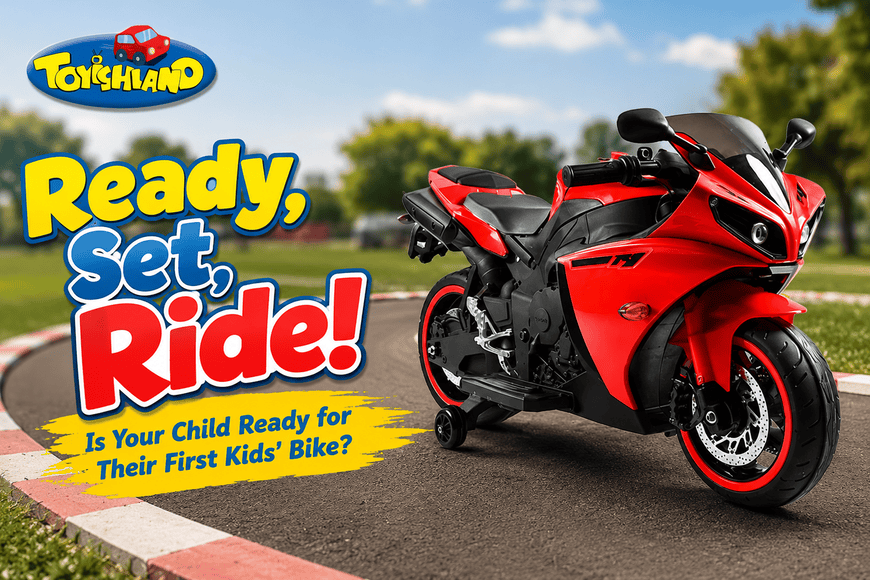
R1 Bike (Ages 3–7 Years)
- 12V battery-operated ride-on
- Hand accelerator and pedal brake
- Key start and live speedometer
- LED headlights, taillights, indicators, and wheel lights
- MP3 player with USB input
- Available in red, white, and blue
Before buying, parents should check the latest product specifications, size and weight limits, assembly instructions, charging guidance, and manufacturer safety information. Adult supervision is recommended during use.
Finding the Right Kids’ Bike at Toyishland
Choosing the right first bike should be exciting, not just another parenting puzzle! We make it easier for parents to browse kids’ bikes and other fun options for active play, all in one convenient place.
When browsing kids bikes at Toyishland, parents can compare options and choose what best fits their child’s age, size, and riding needs. Whether you’re searching for a first bike or simply enjoying kids toys online shopping, we make shopping simple and enjoyable.
The best thing is that you can look around from home while your child is busy deciding whether their future bike should be ‘super-fast’ or just the color they prefer!
How We Review Kids’ Bikes
At Toyishland, our team compares manufacturer specifications, safety documentation, age/height recommendations, and assembly instructions. We do not independently laboratory-test every bike unless explicitly stated.
Ready, Set… Ride!
So, is your child ready for their first bike?
So long as they have the necessary coordination, show real interest, can follow simple instructions, and are comfortable with trying, it might be worth starting their journey on two wheels.
Choosing the right bikes for kids isn’t about buying the biggest or most impressive model. It’s about finding a suitable bike that matches your child’s size, confidence, and abilities.
Browse kids bikes carefully, keep safety at the center of every ride, and make learning fun. Whether you’re exploring outdoor toys or doing kids toys online shopping with Toyishland, the best choice is one that puts a big smile on your child’s face.
All confident young riders begin in the same way: with their first bike, a few wobbles, and someone close by exclaiming, “You’ve got this!”
Shop with safety in mind: Compare current kids’ bike specifications, sizing information, assembly requirements, and manufacturer guidance before choosing a model.
Frequently Asked Questions about Kids’ Bikes
What age should a child get their first bike?
There’s no single right age. Consider your child’s height, balance, coordination, confidence, and interest, along with the manufacturer’s age, height, and weight recommendations.
How do I know whether a kids’ bike is the right size?
Check the manufacturer’s sizing chart and your child’s height. They should be able to get on and off comfortably and comfortably reach and operate the handlebars, brakes, and other controls.
What safety gear does my child need?
A correctly sized, properly fitted helmet is essential. Other protection may include knee and elbow pads, closed-toe shoes, and visible clothing. Adult supervision and a suitable riding environment are also important.
What should I check before buying a kids’ bike online?
Check the recommended age and height, weight limit, bike size, brakes, adjustability, assembly, and safety information. Also review delivery, returns, and warranty details. Avoid buying an oversized bike to “grow into.”
Sources:
1. American Academy of Pediatrics (HealthyChildren.org): Your Child’s First Tricycle or Bike: Important Safety Rules
2. National Highway Traffic Safety Administration (NHTSA): Bicycle Safety: Fitting a Bicycle Helmet
3. Centers for Disease Control and Prevention (CDC): Health Benefits of Physical Activity for Children
Editorial note: This guide provides general information for parents and does not replace the safety, sizing, assembly, maintenance, or usage instructions supplied by the manufacturer of a specific bike or helmet. Product specifications vary by model, so always check the product information before purchase and use.